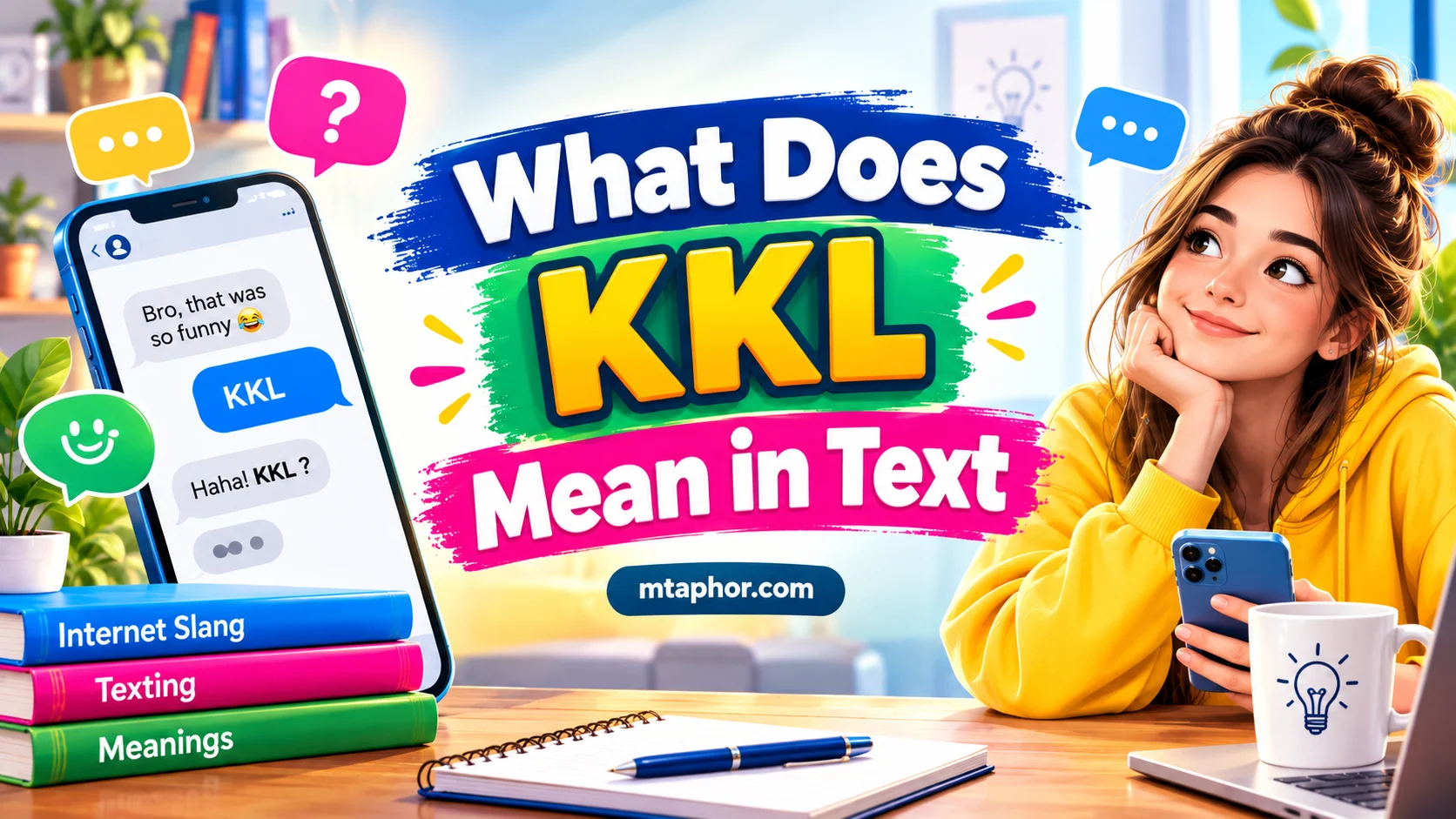
If you see “KKL” in a text, it usually means “Okay, Cool.” It is a casual abbreviation used to show agreement, acknowledgment, or that you understand what someone said.
You may come across KKL in text messages, social media comments, DMs, and casual conversations. People can use it on platforms such as TikTok, Snapchat, Instagram, WhatsApp, and in regular SMS texting.
The reason people search for “what does KKL mean in text” is simple: KKL is not as universally recognized as abbreviations such as IDK or BRB. Its meaning can also depend on the conversation and the person using it.
In most everyday texting situations, however, KKL means “Okay, Cool.” It generally has a relaxed and informal tone.
KKL Meaning in Text
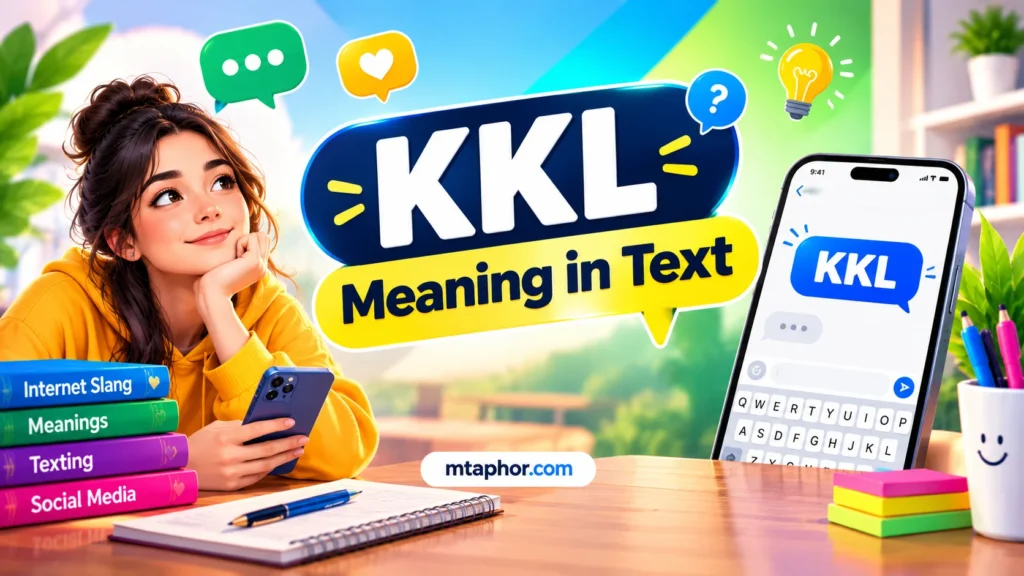
The most common chat meaning of KKL is “Okay, Cool.” It is an informal abbreviation that allows someone to acknowledge a message quickly without typing the full phrase. Abbreviations.com lists KKL under Internet and chat terminology with the definition “Okay, Cool.”
For example, imagine a friend tells you:
“I’ll meet you at 7 tonight.”
You might respond:
“KKL.”
In this situation, you are essentially saying, “Okay, cool,” “Sounds good,” or “Got it.”
KKL is best understood as a texting abbreviation or chat shorthand rather than a formal English word. It belongs to the same general world of short internet expressions that people use to save time while chatting.
What Does “Okay, Cool” Mean?
“Okay, cool” is a simple way to show that you accept or understand something.
Depending on the conversation, KKL can communicate:
- Agreement
- Understanding
- Acceptance
- Acknowledgment
- A relaxed response
- “Sounds good”
- “That works”
- “Got it”
The exact feeling can change with punctuation, emojis, and the relationship between the people chatting.
For example:
“KKL 😂” can feel playful.
That does not necessarily mean the person is angry. Short text replies are often difficult to interpret without knowing the surrounding conversation.
Is KKL an Acronym or Abbreviation?
KKL is generally better described as an abbreviation or chat shorthand in this context.
People use shortened forms of words and phrases all the time when texting. Some become extremely popular, while others remain less common.
KKL is not as universally familiar as “LOL,” “IDK,” “OMG,” or “BRB,” which is one reason someone might need to look it up.
It is also worth remembering that KKL does not have only one meaning everywhere. Acronym databases list several unrelated definitions for the same three letters, including organizations and other terms. In a normal texting conversation, context is what tells you which meaning is intended.
Where People Use KKL
KKL can appear in informal digital communication. Its meaning remains essentially the same when it is being used as “Okay, Cool,” but the style of the conversation can vary from platform to platform.
KKL on TikTok
TikTok has created a huge environment for short expressions, abbreviations, jokes, and rapidly changing internet language.
If you see KKL in a TikTok comment or private message, it may simply be someone saying “Okay, Cool” or acknowledging something in a relaxed way.
For example:
Person A: “I’m posting the video tomorrow.”
Person B: “KKL.”
Here, the response is basically “Okay, cool.”
However, TikTok slang changes quickly, and a three-letter abbreviation can sometimes have a niche meaning within a particular community. That is why it is always better to consider the surrounding words instead of assuming every use of KKL has exactly the same meaning.
KKL on Snapchat
Snapchat conversations are usually informal and fast-paced, making abbreviations particularly useful.
Someone might say:
“I’ll send it later.”
You could see:
“KKL.”
The person is acknowledging the message and indicating that the plan is fine.
Snapchat also relies heavily on emojis, so something like “KKL 😂” may sound more playful than simply “KKL.”
KKL on Instagram
Instagram users may use KKL in direct messages, comments, group chats, or replies.
For example:
“I’ll tag you in the post.”
“KKL, thanks!”
The abbreviation can make a response feel quick and casual.
It is more suitable for an informal DM than a professional Instagram conversation.
KKL on WhatsApp
WhatsApp is widely used for everyday conversations with friends, relatives, classmates, and coworkers.
In a casual WhatsApp chat, KKL can mean:
- “Okay, cool.”
- “Sounds good.”
- “That’s fine.”
- “Got it.”
For example:
“We’re leaving at 8.”
“KKL.”
The response shows that the person has understood the plan.
KKL in SMS Texting
Traditional SMS messages can also contain abbreviations such as KKL.
Because SMS conversations are often short, people may use shorthand instead of complete sentences.
For example:
“Can you pick me up at 6?”
“KKL.”
This is simply a quick acknowledgment.
Still, if you are texting a teacher, manager, customer, or someone you do not know well, it is usually safer to write “Okay, sounds good” rather than relying on less familiar slang.
Real Chat Examples
The easiest way to understand KKL is to see how it works in realistic conversations.
Example 1: Making Plans
A: Are you free for dinner tonight?
B: Yeah, around 7 works.
A: KKL, see you then.
Here, KKL means “Okay, cool.”
Example 2: Confirming a Plan
A: I’ll send you the notes after class.
B: KKL, thanks!
A: No problem.
The response is friendly and appreciative.
Example 3: Casual Conversation
A: I finally finished that movie you recommended.
B: What did you think?
A: It was actually pretty good.
B: KKL 😂
In this situation, KKL is a relaxed acknowledgment.
Example 4: Changing Plans
A: Can we meet at 6 instead of 5?
B: Yeah, that’s fine.
A: KKL, thanks for understanding.
The abbreviation communicates agreement.
Example 5: Talking With a Friend
A: Don’t forget we have practice tomorrow.
B: KKL, I put it on my calendar.
A: Perfect.
Here, KKL means the person understands.
Example 6: Instagram DM
A: I’ll send you the pictures tonight.
B: KKL!
A: I’ll send the best ones first.
It is simply a quick positive response.
Example 7: Snapchat
A: I’m going to be late by like ten minutes.
B: KKL, no worries.
A: Thanks!
The phrase helps keep the conversation relaxed.
Example 8: WhatsApp Group
A: Everyone meet outside the restaurant at 8.
B: KKL.
C: Sounds good.
D: See you guys there.
KKL works as a quick confirmation.
Example 9: Talking About Homework
A: I’ll explain the last question tomorrow.
B: KKL, that would help a lot.
A: Sure.
Again, the abbreviation means “Okay, cool.”
Example 10: A Lighthearted Conversation
A: You were right about the ending.
B: Finally, you admit it 😂
A: KKL, don’t get too excited.
B: Too late.
Here, KKL helps create a playful, casual tone.
How to Reply When Someone Says “KKL”
If someone sends you “KKL,” you usually do not need to overthink your response.
If they are simply acknowledging something, you can continue the conversation naturally.
Funny Replies
If you are talking to a close friend, you can make the response playful.
- “KKL yourself 😂”
- “That’s all I get? 😂”
- “Very enthusiastic response.”
- “Glad we reached an agreement.”
- “KKL accepted.”
The best funny response depends on your relationship with the person.
Casual Replies
For everyday conversations, keep it simple:
- “Cool.”
- “Sounds good.”
- “Perfect.”
- “Yep!”
- “Awesome.”
- “See you then.”
You do not need to reply with another abbreviation.
Friendly Replies
If you want to sound warm and positive, you could say:
- “Awesome, thanks!”
- “Great! See you soon.”
- “Perfect 😊”
- “Sounds good to me!”
- “Thanks for letting me know.”
These responses work well when you want the conversation to feel friendly rather than overly brief.
Neutral Replies
If you do not know the person very well, a neutral response is usually best.
Try:
- “Okay, thanks.”
- “Sounds good.”
- “Understood.”
- “Alright.”
- “Got it.”
These are clearer than slang and are unlikely to be misunderstood.
Is KKL Rude or Offensive?
KKL is generally not considered a rude or offensive expression when it is being used to mean “Okay, Cool.”
It is simply casual shorthand.
However, tone matters in texting.
Imagine you send someone a long and emotional message and they respond only:
“KKL.”
You might feel that they are dismissing you.
But the abbreviation itself is not automatically rude. The impression comes from the situation, the relationship, and the way the message is written.
Is KKL Safe to Use?
In a casual conversation with friends, KKL is generally fine.
You can use it when chatting with people who already understand internet shorthand.
The bigger issue is clarity, not offensiveness.
If you are unsure whether someone knows the abbreviation, saying “Okay, cool” is clearer.
Is KKL Appropriate at School?
With friends or classmates, informal texting may be perfectly normal.
However, when communicating with a teacher, professor, school administrator, or another authority figure, it is better to use standard language.
Instead of:
“KKL.”
you could write:
“Okay, thank you.”
That sounds more respectful and is immediately understandable.
Is KKL Appropriate at Work?
In professional communication, avoid unfamiliar slang unless you are certain that the workplace culture is very informal.
For an email or message to a manager, client, or customer, use:
“Sounds good.”
or:
“Okay, thank you.”
rather than KKL.
The goal in professional writing is clarity. There is little benefit in making a message shorter if the reader has to search for the abbreviation’s meaning.
Who Uses This Term?
KKL is most likely to appear in informal online conversations, especially where short replies and internet shorthand are common.
You may encounter it among teenagers, young adults, and other people who regularly communicate through messaging apps and social platforms.
Gen Z Usage
Gen Z has grown up with texting, social media, DMs, comments, and online communities, so abbreviated language is a normal part of digital communication.
That does not mean every Gen Z user knows KKL.
Internet slang is highly variable. A phrase that is familiar in one online group may be almost unknown in another.
KKL is therefore better described as a casual chat abbreviation than as a universal Gen Z expression.
Common Platforms
You may encounter KKL in:
- TikTok
- Snapchat
- SMS
- Online chats
- Direct messages
- Group conversations
The platform does not necessarily change the meaning. The surrounding conversation is more important.
How Often Does KKL Appear Online?
KKL is less universally recognized than many major texting abbreviations.
For comparison, almost everyone who regularly texts has probably encountered terms such as IDK, LOL, or BRB.
KKL is more niche. Some people use it naturally, while others may have never seen it before.
That explains why searches for its meaning can be confusing: the abbreviation exists, but it is not used consistently enough to be instantly recognizable to everyone.
Origin of the Term
There is no widely established single origin story for KKL as the texting abbreviation “Okay, Cool.”
A documented chat definition of KKL as “Okay, Cool” dates back at least to a 2012 entry on Abbreviations.com, which places it in Internet/chat terminology.
It is reasonable to view KKL as part of the broader culture of internet shorthand. Online communication encourages people to shorten common phrases, especially when they are having quick conversations.
Expressions such as “OK,” “LOL,” “BRB,” and “IDK” demonstrate how frequently people compress language online.
KKL fits that same general pattern.
However, it would be misleading to claim that KKL has one confirmed creator or a specific moment when it was invented. Available references show the meaning, but they do not establish a definitive inventor or origin date.
Why Does Internet Slang Keep Changing?
Digital language is constantly evolving.
People create abbreviations because:
- They are faster to type.
- They fit short messages.
- They make conversations feel informal.
- They can communicate tone quickly.
- Online communities create their own expressions.
Some expressions become mainstream. Others disappear after a few years.
That is why context is especially important when interpreting short forms such as KKL.
KKL vs. Other Common Texting Abbreviations
Here is a quick comparison between KKL and several much more familiar texting shortcuts:
| Term | Meaning | Type | Usage | Popularity |
|---|---|---|---|---|
| KKL | Okay, Cool | Chat abbreviation | Casual texting, chats, DMs | Less common |
| IDK | I Don’t Know | Abbreviation | Everyday texting and social media | Very common |
| IDC | I Don’t Care | Abbreviation | Casual conversations and social media | Very common |
| IMO | In My Opinion | Abbreviation | Texting, comments, online discussions | Common |
| BRB | Be Right Back | Abbreviation | Chats and messaging | Common |
The main difference is familiarity.
Someone who sees IDK will probably understand it immediately. Someone who sees KKL may need to ask what it means.
That does not make KKL incorrect. It simply means the abbreviation is less universally understood.
Real-World Usage Example
Imagine two friends are planning to meet at a coffee shop.
One friend sends:
“I’ll get there around 5:30. I might be five minutes late.”
The other replies:
“KKL, no problem.”
In this situation, there is no hidden meaning. The person is simply saying:
“Okay, cool. No problem.”
The abbreviation works because both people are having an informal conversation.
Now imagine the same message is sent by a customer to a business:
“I’ll arrive at 5:30.”
A professional reply such as:
“Okay, sounds good. We’ll see you then.”
would be much clearer than:
“KKL.”
This illustrates an important rule for internet slang: the right expression depends on the audience.
Frequently Asked Questions
What does KKL mean in text messages?
In casual texting, KKL usually means “Okay, Cool.” It is used as a quick way to acknowledge a message, agree with something, or show that a plan is fine.
What does KKL mean on TikTok?
On TikTok, KKL can be used as casual chat shorthand for “Okay, Cool.” However, slang can vary between online communities, so the surrounding conversation should always be considered.
Is KKL slang?
KKL is best described as an informal texting abbreviation or chat shorthand. It is not a standard English word and is mainly suited to casual digital communication.
Is KKL rude or offensive?
No. When KKL means “Okay, Cool,” it is generally not offensive. However, replying with only “KKL” to a serious or emotional message could come across as dismissive depending on the context.
How should you reply to KKL?
You can respond naturally with “Cool,” “Sounds good,” “Perfect,” “Okay,” or another appropriate reply. If the conversation is friendly, an emoji can also make your tone clearer.
Final Thoughts
So, what does KKL mean in text? In most casual chat situations, it means “Okay, Cool.” It is a short, informal way to acknowledge what someone has said, agree with a plan, or keep a conversation relaxed.
You may see it in texts, DMs, WhatsApp chats, Snapchat conversations, Instagram messages, and other informal online spaces.
The most important thing to remember is that KKL is not as universally recognized as abbreviations such as IDK, IDC, IMO, or BRB. Because the same three letters can have other meanings in different contexts, the surrounding conversation matters.
Use KKL with friends or people who understand your texting style. For teachers, employers, customers, formal emails, or professional situations, clearer phrases such as “Okay, sounds good” are usually a better choice.
Discover More Post
Metaphors for Being Trapped Powerful Ways to Describe Feeling Stuck 2026
What Does RT Mean in Text? Real Meaning Examples & Social Media Use 2026
What Does pmo mean in text ? Real Meaning Examples & Social Media Use 2026

Kir0 is a seasoned English language educator, writer, and SEO content expert with over 10 years of experience in crafting engaging, high-quality content. Specializing in literary devices, metaphors, similes, and figurative language, Kir0 helps readers and writers bring words to life. Passionate about teaching and creative writing, he combines expertise with practical insights to make complex concepts simple and relatable. With a strong focus on SEO-optimized, human-friendly content, Kir0 has guided countless blogs, websites, and educational platforms to achieve higher visibility and audience engagement. On mtaphor.com, he shares valuable tips, examples, and creative ideas to inspire writers, students, and language enthusiasts worldwide