Metaphors are one of the most powerful tools in the English language. They allow writers to express deep emotions, complex ideas, and vivid imagery in just a few words. From classic poetry to modern novels, metaphors shape how readers feel, think, and imagine.
this comprehensive guide explores the best metaphors in literature, including their meanings, usage, famous examples, comparisons, and practical tips for students, writers, and casual readers.
In everyday conversations, metaphors help us explain emotions and experiences naturally. From real-life writing experience, using strong metaphors improves clarity, creativity, and emotional impact. Whether you’re writing essays, stories, captions, speeches, or novels, mastering metaphors can transform your writing.
What Are Best Metaphors in Literature?
A metaphor is a figure of speech that directly compares two unlike things to highlight a similarity, without using “like” or “as.”
Simple definition:
A metaphor describes something by saying it is something else.
Example:
“Time is a thief.”
Meaning: Time steals moments from our lives.
In literature, the best metaphors create strong imagery, emotional depth, and memorable expression.
How Best Metaphors Work in Language and Writing
Metaphors work by linking unfamiliar or abstract ideas with familiar images. This makes writing more engaging and understandable.
Why writers use metaphors:
- To express emotions deeply
- To create vivid imagery
- To simplify complex ideas
- To make writing memorable
- To strengthen storytelling
In everyday conversations, people naturally use metaphors without realizing it, such as:
- “He has a heart of stone.”
- “Her words were daggers.”
Examples of Metaphors in Everyday Life
In everyday conversations, metaphors appear constantly:
- Life is a journey
- Time is money
- Love is a battlefield
- Ideas are seeds
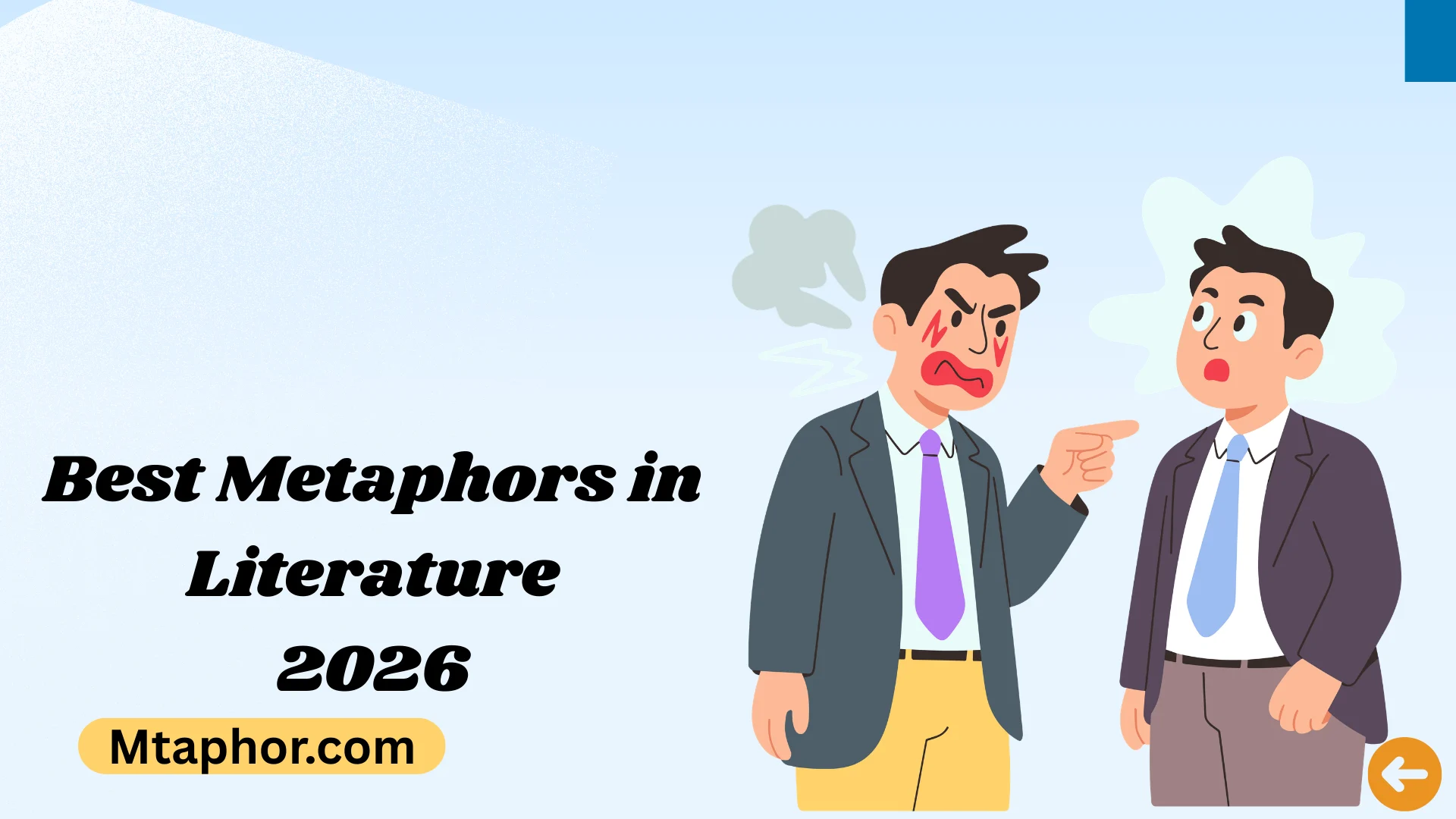
- Anger is fire
These expressions help us explain emotions, relationships, and experiences clearly.
Famous Metaphors in Literature
Some of the greatest writers used metaphors to create timeless beauty.
Classic Literary Metaphors:
- William Shakespeare: “All the world’s a stage.”
- Emily Dickinson: “Hope is the thing with feathers.”
- John Keats: “A thing of beauty is a joy forever.”
- George Orwell: “Big Brother is watching you.”
These metaphors have shaped literary history and continue to inspire writers today.
Best Metaphors in Literature vs Related Concepts
| Concept | Definition | Example |
|---|---|---|
| Metaphor | Direct comparison | Time is a thief |
| Simile | Comparison using like/as | Time is like a thief |
| Personification | Human traits to objects | Time steals moments |
| Symbolism | Objects representing ideas | Dove = peace |
Key difference:
Metaphors make direct comparisons, while similes use like or as.
How to Use Best Metaphors Correctly
From real-life writing experience, effective metaphors should:
- Match the emotional tone
- Fit naturally in the sentence
- Avoid confusion
- Enhance meaning, not complicate it
Tips:
- Use metaphors sparingly
- Keep imagery relatable
- Avoid mixed metaphors
- Match context and audience
Common Mistakes Students and Writers Make
- Overusing metaphors
- Mixing multiple metaphors
- Using unclear comparisons
- Forcing metaphors unnaturally
- Using clichés excessively
Example of mistake:
“He drowned in a sea of fire.” → Confusing imagery
1. Life is a journey
Meaning: Life is full of experiences and lessons.
Example: Life is a journey filled with unexpected turns.
Other ways: Path of life, road of destiny
2. Time is a thief
Meaning: Time steals moments.
Example: Time is a thief that steals our youth.
Other ways: Time flies, fleeting time
3. Hope is light
Meaning: Hope brings guidance.
Example: Her smile was a light of hope.
Other ways: Ray of hope
4. Love is fire
Meaning: Love is intense and passionate.
Example: Their love burned like fire.
Other ways: Burning desire
5. Words are weapons
Meaning: Words can hurt.
Example: His words were sharp weapons.
Other ways: Verbal attack
6. Heart is stone
Meaning: Emotionless person.
Example: His heart was stone after betrayal.
Other ways: Cold-hearted
7. Mind is a battlefield
Meaning: Mental struggle.
Example: His mind was a battlefield of thoughts.
Other ways: Inner conflict
8. Dreams are wings
Meaning: Dreams give freedom.
Example: Dreams gave her wings to fly.
Other ways: Flight of ambition
9. Knowledge is light
Meaning: Knowledge removes ignorance.
Example: Education is the light of life.
Other ways: Enlightenment
10. Anger is fire
Meaning: Uncontrolled emotion.
Example: Anger burned in his chest.
Other ways: Rage
11. Fear is shadow
Meaning: Fear follows silently.
Example: Fear shadowed his steps.
Other ways: Lingering dread
12. Silence is music
Meaning: Calm peace.
Example: Silence became sweet music.
Other ways: Peaceful stillness
13. Tears are rain
Meaning: Deep sorrow.
Example: Tears rained from her eyes.
Other ways: Emotional storm
14. Truth is light
Meaning: Honesty brings clarity.
Example: Truth is the light of justice.
Other ways: Revelation
15. Lies are poison
Meaning: Lies destroy trust.
Example: Lies poisoned their friendship.
Other ways: Toxic deception
16. Memory is a mirror
Meaning: Reflection of past.
Example: Memory mirrored her childhood.
Other ways: Reflection
17. Childhood is a garden
Meaning: Growth and innocence.
Example: Childhood bloomed like a garden.
Other ways: Innocent years
18. Life is a battlefield
Meaning: Constant struggle.
Example: Life is a battlefield of survival.
Other ways: Daily struggle
19. Ideas are seeds
Meaning: Growth potential.
Example: His ideas were seeds of change.
Other ways: Creative beginnings
20. Books are windows
Meaning: Knowledge access.
Example: Books are windows to the world.
Other ways: Learning portals
21. Faith is an anchor
Meaning: Stability.
Example: Faith anchored her soul.
Other ways: Spiritual support
22. Jealousy is poison
Meaning: Harmful emotion.
Example: Jealousy poisoned his mind.
Other ways: Toxic envy
23. Freedom is air
Meaning: Essential need.
Example: Freedom felt like fresh air.
Other ways: Breath of life
24. Death is sleep
Meaning: Peaceful ending.
Example: Death became eternal sleep.
Other ways: Final rest
25. Fear is ice
Meaning: Paralyzing terror.
Example: Fear froze his body.
Other ways: Frozen with fear
26. Happiness is sunshine
Meaning: Joyful warmth.
Example: Her laughter was sunshine.
Other ways: Radiant joy
27. Loneliness is darkness
Meaning: Emotional emptiness.
Example: Loneliness wrapped him in darkness.
Other ways: Emotional void
28. Anger is thunder
Meaning: Sudden rage.
Example: His anger thundered.
Other ways: Explosive rage
29. Love is ocean
Meaning: Deep emotion.
Example: Their love was an endless ocean.
Other ways: Boundless affection
30. Life is a book
Meaning: Experiences are chapters.
Example: Each year is a new chapter.
Other ways: Story of life
31. Thoughts are waves
Meaning: Constant flow.
Example: Thoughts crashed like waves.
Other ways: Stream of thoughts
32. Time is river
Meaning: Constant movement.
Example: Time flows like a river.
Other ways: Flowing moments
33. Fear is prison
Meaning: Mental limitation.
Example: Fear imprisoned his dreams.
Other ways: Mental cage
34. Kindness is gold
Meaning: Great value.
Example: Kindness is pure gold.
Other ways: Precious heart
35. Patience is key
Meaning: Unlocks success.
Example: Patience opened the door of success.
Other ways: Secret to success
36. Knowledge is power
Meaning: Strength through learning.
Example: Knowledge empowered his mind.
Other ways: Mental strength
37. Pain is storm
Meaning: Emotional suffering.
Example: Pain stormed through her heart.
Other ways: Emotional chaos
38. Dreams are stars
Meaning: Guiding hope.
Example: Dreams guided her path.
Other ways: Guiding lights
39. Life is puzzle
Meaning: Complexity.
Example: Life is a puzzle to solve.
Other ways: Mystery of existence
40. Love is magic
Meaning: Transformative power.
Example: Love changed everything like magic.
Other ways: Enchantment
Practical Uses of Metaphors for Different Audiences
Students:
- Improve essay writing
- Enhance creative stories
- Score better in exams
Writers:
- Create emotional impact
- Strengthen storytelling
- Build poetic imagery
Casual Readers:
- Improve communication
- Express emotions naturally
- Create engaging captions
FAQ
1. What are metaphors in simple words?
Metaphors compare two different things directly to show similarity.
2. Why are metaphors important in literature?
They create vivid imagery, emotional depth, and stronger storytelling.
3. How many metaphors should I use in writing?
Use them naturally and sparingly to avoid confusion.
4. Are metaphors and similes the same?
No. Metaphors compare directly, similes use like or as.
5. Can metaphors improve speech and communication?
Yes. They make ideas clearer, stronger, and memorable.
Conclusion
Metaphors are the soul of expressive writing. The best metaphors in literature bring depth, beauty, and emotional power to words, transforming simple sentences into unforgettable expressions.
By understanding and practicing these metaphors, students, writers, and readers can greatly enhance their communication skills. From essays to poetry, captions to speeches, metaphors unlock creativity and imagination.
Practice using these metaphors daily, and soon your writing will become richer, clearer, and far more impactful.
Discover More Post
ASL Meaning in Chat, ASL Meaning in Slang & What Does ASL Mean? 2026
🌟 Teaching Metaphors A Fun Magical Way to Make Words Come Alive!2026
Weather Metaphors Meaning Examples & How to Use Them in Writing 2026

Zeni is an experienced English language educator, writer, and SEO content strategist with over 10 years of expertise in teaching, writing, and digital content creation. She specializes in literary devices, metaphors, similes, and figurative language, helping readers understand complex concepts in simple, relatable ways. Passionate about education and creative writing, Zeni combines her teaching experience with SEO knowledge to create high-quality, engaging, and search-optimized content. Her work empowers writers, students, and bloggers to express ideas clearly and effectively. Zeni is dedicated to making learning fun, practical, and accessible for audiences worldwide.